I Was In It Too
I Was In It Too

Working inside a real estate boom that kept rewarding urgency, even when parts of the market stopped feeling healthy.
Estimated read time: 9 minutes
There are parts of the last real estate boom that never sat entirely right with me.
That is not easy to say, because I was in it too. I was working inside that market. I was helping people buy and sell homes during those years. I benefited from it the way most active Realtors benefited from it. The phone rang. Properties moved. Prices climbed. There was urgency everywhere.
From the outside, it probably looked simple. The market was hot, Realtors were busy, sellers were happy, buyers were scrambling, and everyone in the industry seemed to be repeating some version of the same message.
Prices are up.
Inventory is low.
Demand is strong.
Act quickly.
That was not entirely wrong. It was often true. But truth without context can still become noise. When the same message is repeated over and over, without enough caution, humility, or reflection, it can start to feel less like advice and more like momentum feeding on itself.
That is the part that bothered me.
I could not tell people to stop living their lives. People still had practical reasons to move. Families were growing. Couples were separating. Parents were aging. Jobs changed. Children needed different schools. Some people had outgrown their homes. Others needed to downsize. Some were relocating. Some simply wanted a different life.
Real estate does not pause because the market feels uncomfortable.
That was one of the hardest parts of those years. It was not as simple as saying, “Do not buy.” That might have sounded wise from a distance, but real people do not live inside market charts. They live inside marriages, careers, commutes, basements, nurseries, school districts, family obligations, and sometimes very difficult personal transitions.
A person who needed to move in 2017, 2020, or 2021 could not necessarily wait for the market to become reasonable. Reasonable might not arrive on schedule. It might not arrive at all. Life often forces decisions before the market gives anyone a perfect opening.
So I worked inside it. I advised people as carefully as I could. I tried to explain the risks. I tried to separate need from panic. I tried to help clients understand what they were stepping into. But I also know I was part of an industry that, taken as a whole, often sounded far too comfortable with the fever pitch.
That is where the tension is for me.
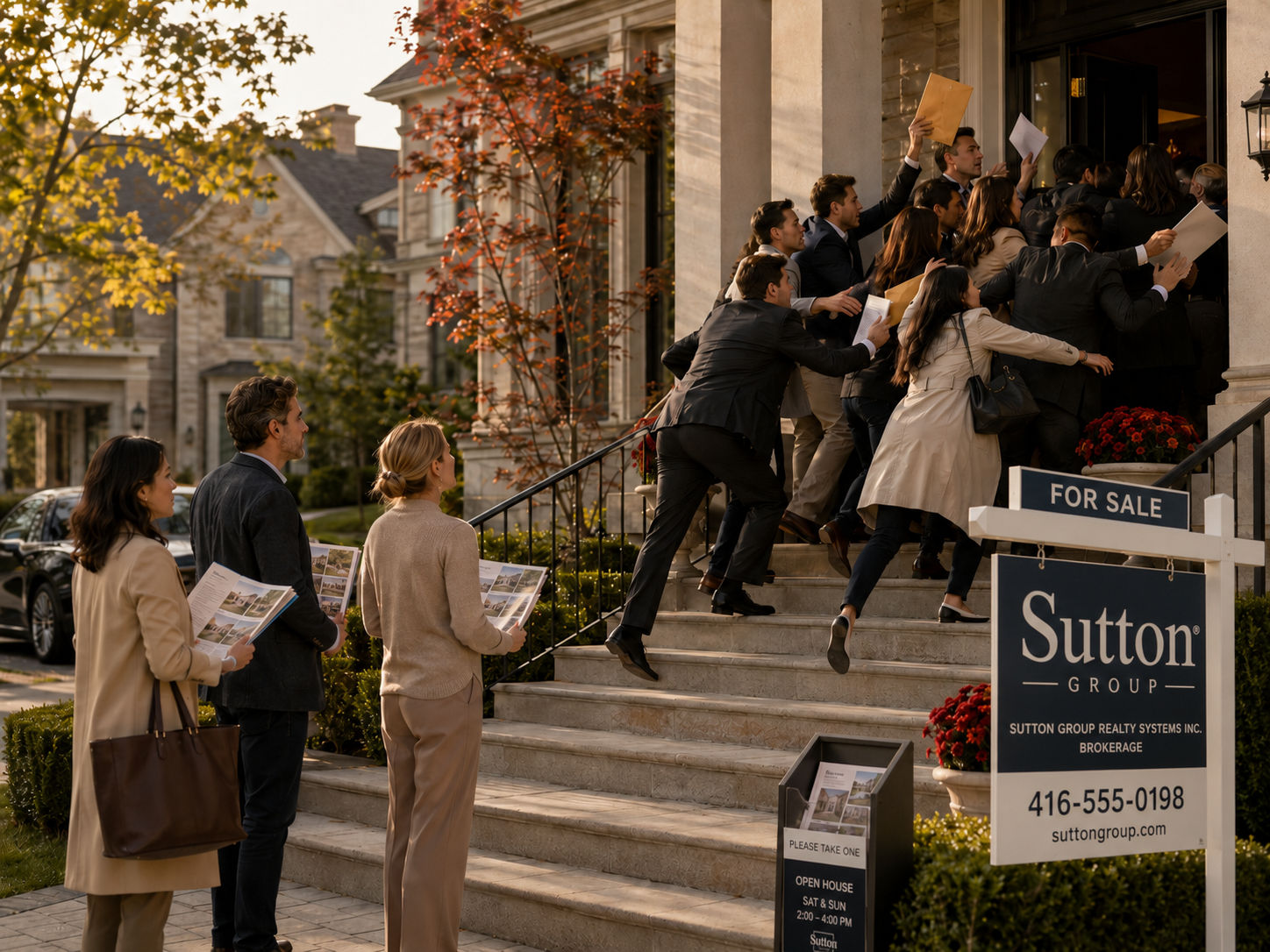
I was not standing outside the system, watching it from a safe distance. I was in the room. I was at the showings. I was writing offers. I was reviewing sold prices. I was having conversations with buyers who were exhausted, sellers who were thrilled, and people who were trying to make rational decisions in an irrational environment.
“
A strong market rewards preparation. An unhealthy market rewards panic, overreach, and the willingness to go further than the next person.
There were moments when the market felt strong. Then there were moments when it felt unhealthy. Eventually, those two things became difficult to separate.
A strong market is one thing. An unhealthy market is something else.
A strong market has confidence. An unhealthy market has pressure.
A strong market gives people options. An unhealthy market makes people feel like they are running out of time.
A strong market rewards preparation. An unhealthy market starts rewarding panic, overreach, and sometimes just the willingness to go further than the next person.
That is where I started to feel the discomfort. Not because people were buying and selling. Not because prices were rising. Markets rise and fall. That is part of the cycle. What bothered me was the culture that formed around it.
Too much of the industry became addicted to the upward story.
Every sale was proof of something. Every over asking result became a marketing opportunity. Every new record was treated like a trophy. The language became more aggressive, more urgent, and less reflective. It was not always about helping people understand the market. Sometimes it was about making sure everyone knew who was winning inside it.
That matters, because the public takes cues from the industry. When Realtors, lenders, investors, media voices, and social media commentators all keep pointing in the same direction, it can create a kind of emotional weather system. People start to feel that waiting is foolish, caution is weakness, and hesitation is the same thing as missing out.
I do not think most Realtors were trying to harm anyone. I really do not. Many were working hard for their clients in an impossible environment. Many were trying to get buyers into homes and sellers the best outcomes available. I also know how difficult it is to be the person telling a client something they do not want to hear when ten other voices are telling them to go harder, move faster, or stretch further.
Sold Over Asking
One of the clearest examples of boom-market noise was the way “sold over asking” became a trophy, even when the asking price was part of the strategy. This article looks at how a technically true statement can still mislead the public when the context is left out.
Read the articleBut good intentions do not erase the bigger problem. The industry did not pause enough to ask what all of this was doing to people.
What was it doing to buyers who were writing offer after offer and losing? What was it doing to young families who felt like the door to home ownership was closing in front of them? What was it doing to sellers who were being trained to believe that any price short of a bidding war was somehow a failure? What was it doing to the way people understood value, risk, debt, and shelter?
Those questions were always there, even when the market was working. That is probably the most honest way I can say it. The market was working for many people. It was certainly working for much of the real estate industry. But something can work and still not feel healthy.
I think back to conversations with clients where the advice was not clean or easy. There were buyers who needed a home, but the numbers were uncomfortable. There were sellers who had every reason to sell, but the process around pricing and competition had become distorted. There were people making decisions in a market where calm was hard to find.
In those moments, the job was not to predict the future with false confidence. The job was to slow the room down as much as possible.
What can you afford? What happens if prices flatten? What happens if rates change? How long do you expect to live here? Are you buying because it makes sense, or because you are afraid? Are you selling because the move is right, or because the market has made you feel invincible?
Those were the conversations that mattered. Not the slogans. Not the victory posts. Not the noise.
Looking back, I do not want to pretend I was above it all. I was not. I was a working Realtor in a rising market. I had clients to serve, a business to run, and a role to play. There were parts of that market that were exciting. There were outcomes that helped people. There were sellers who made life changing money. There were buyers who secured homes they still love today.
It would be dishonest to rewrite the entire period as if it was all bad. It would also be dishonest to pretend it was all fine.
That is the uncomfortable middle I think more people in this business should be willing to stand in. The boom years were not just a story of success. They were also a story of pressure, fear, distortion, and a level of confidence that often outpaced good judgment.
Now that the market has changed, the noise has changed with it. The same industry that once had too much cheerleading now has a different kind of performance. The positivity machine has been replaced, in some corners, by the negativity machine. Some people who made careers celebrating every price increase now speak as if they were cautious all along. Others predicted collapse for years, and when the market finally softened, they treated it as proof they had been right the whole time.
That is not judgment. That is branding.
Before you trust the advice, it helps to understand the pressure behind it. Not all Realtors are working from the same incentives. Not all business models create the same obligations. Not all agents have the same room to be patient, cautious, or honest when the honest answer might mean no sale.
That does not automatically make one Realtor good and another bad. It simply means consumers should understand what sits behind the advice they are receiving. Is the person across from you trying to solve your problem, or are they trying to feed a machine that always needs the next deal?
That question matters in every market, but it matters even more when the market stops making sense.
“
Some people made careers celebrating every price increase, then later spoke as if they had been cautious all along. Others predicted collapse for years, then treated a softer market as proof they had been right the whole time.

The lesson from the boom years should not be that optimism was always wrong. It should not be that pessimism is now always right. The lesson should be that consumers deserve something better than whatever message happens to be useful in the moment.
They deserve context.
They deserve restraint.
They deserve someone who can say, “This may still be the right move for you,” without pretending the market is risk free.
They also deserve someone who can say, “Maybe this is not the right time,” even when that advice costs the Realtor money.
That is where I think this conversation has to go next.
“
That is what I want to hold myself to. Not perfection. Not hindsight dressed up as wisdom. Just a more honest standard than the industry often rewards.
During the boom, the hard thing was admitting that a rising market could still be unhealthy. In today’s slower, more uncertain market, the hard thing may be admitting that not every person needs to act. Not every move is urgent. Not every listing should happen now. Not every buyer should be pushed into the market just because activity is lower and there may be more room to negotiate.
The honest advice changes with the client, not with the sales environment.
That is what I want to hold myself to. Not perfection. Not hindsight dressed up as wisdom. Just a more honest standard than the industry often rewards.
I was in it too.
I worked inside the boom. I benefited from it. I also felt the discomfort of a market that, at times, stopped feeling grounded. I do not say that to separate myself from the industry. I say it because I think anyone asking for the public’s trust should be willing to tell the truth about the system they work inside.
Real estate is emotional. It is financial. It is personal. It is practical. It is never just a graph, a headline, or a sales pitch.
When the market stops making sense, people do not need louder voices.
They need steadier ones.
