Ai Isn't the problem
AI Isn’t the Problem. Pretending Is.
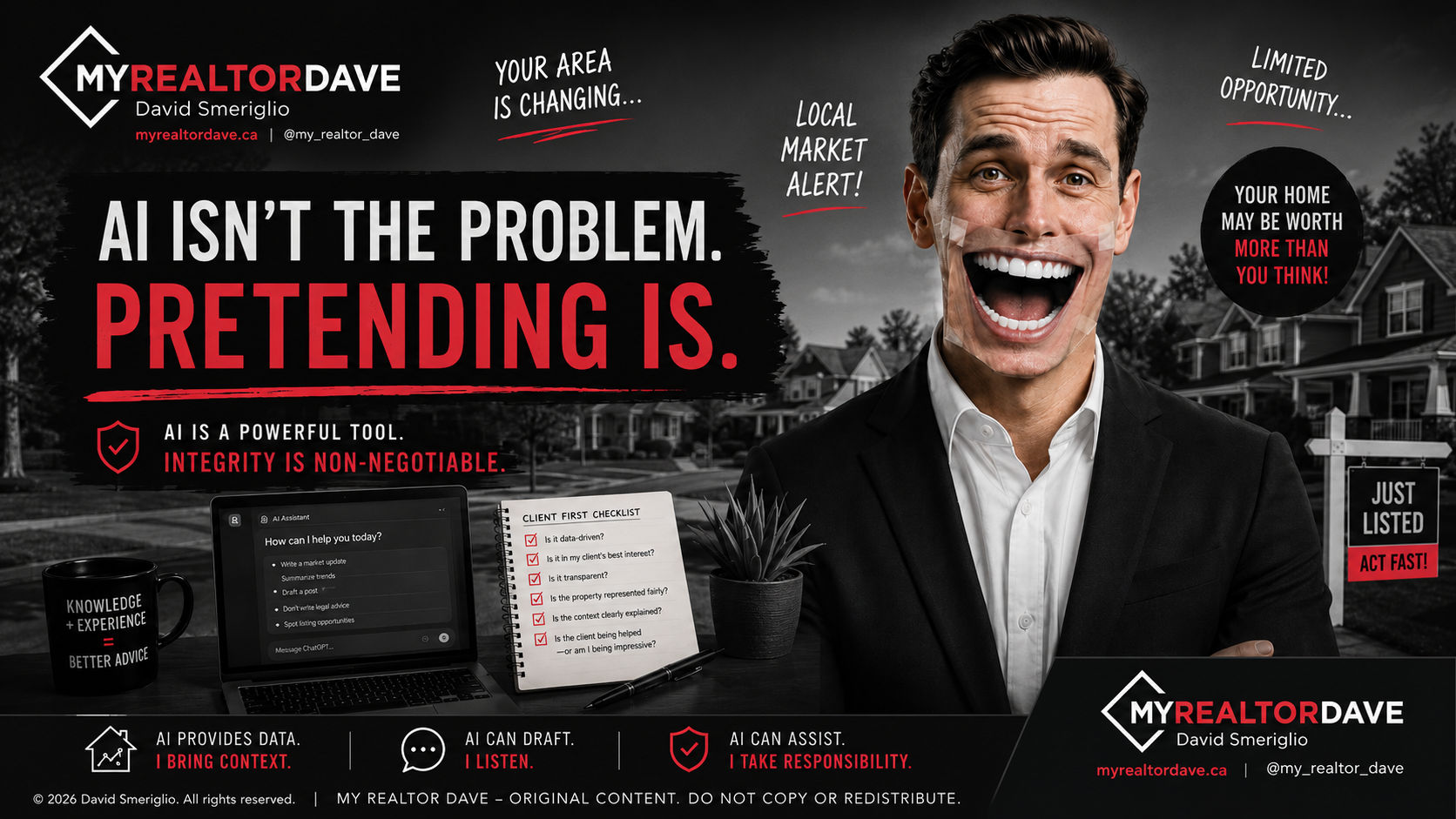
The issue is not whether Realtors use AI. The issue is whether they use it honestly.
Estimated read time: 5 minutes
AI isn’t the problem. Pretending is.
You have probably seen some version of the ad. A person appears on screen, or sometimes it is an AI generated presenter, and the message sounds urgent. Homeowners in your area may be at risk. Buyers in your area may be missing out. The market in your city is changing. Sellers in your neighbourhood need to know this before they make a move.
It sounds local. It sounds specific. It sounds like someone with boots on the ground is speaking directly to your community. But after a few seconds, you can usually feel what it is. It is not local knowledge. It is a script.
The city name has been swapped in. The fear has been templated. The opportunity has been manufactured. The whole thing is designed to make people believe they are hearing from someone who understands their area, when really they are being pushed into a lead generation funnel.
To me, that is one of the worst uses of AI and automation in marketing. Not because AI was involved, but because pretending was involved.
This is not only a real estate problem, but real estate may be one of the industries where it matters most. We are not selling headphones, meal kits, or running shoes. We are dealing with people’s homes, finances, family decisions, timing, stress, debt, divorce, aging parents, estates, first purchases, relocations, and sometimes the largest transaction of someone’s life.
So when a Realtor uses automation, AI, actors, templates, fake urgency, fake local messaging, or polished scripts to manufacture trust they have not earned, I think that deserves scrutiny. That is the ethical line.
AI can be a useful tool. I use it myself.
I use it to help me write faster, organize ideas, sharpen thoughts I already have, and explain complicated things more clearly. I use it to test whether an argument is landing the way I intend it to land. I use it for article structure, image concepts, audio preparation, and sometimes to challenge my wording when I know what I mean but have not quite found the best way to say it yet.
I also think AI can help a Realtor do better work. It can help organize property notes, compare information, prepare client explanations, tighten communication, build better checklists, improve listing copy, and make complex market conversations easier for people to understand. Used properly, it can make a Realtor clearer, more prepared, and more useful.
But that is not the same thing as using AI to pretend.
There is a difference between using AI to express your own judgment more clearly and using AI to manufacture the appearance of judgment you do not actually have. There is a difference between using AI to improve communication and using AI to pump out generic mass marketing noise that says nothing, means nothing, and exists only to keep your face in front of people.
There is also a difference between using AI to create an image concept and using AI to visually embellish a property in a way that misleads buyers about what is actually there. And there is a difference between using AI to help write about a community you genuinely know and using automation to make people think you are local when you are not.
Next in the Series
I Was In It Too
AI may be making real estate marketing louder and more convincing, but the culture behind much of that messaging existed long before AI came along.
And I think it's worth acknowledging something: I was part of that culture too.
I worked through the extraordinary boom years, benefited from them, and sometimes found myself uncomfortable with aspects of an industry I was very much a part of.
In the next article, I take a more personal look at those years, the contradictions I experienced, and why I believe they're worth revisiting today.
That last one bothers me because real estate already has enough noise. Enough bravado. Enough shallow content pretending to be expertise. Enough market updates that are really just lead capture. Enough value posts that are nothing more than recycled sales funnels with a different photo.
AI can make all of that worse. It can help people produce more content with less thought, more polish with less substance, more fake urgency, more fake local messaging, and more generic advice dressed up as insight. But it can also do the opposite. It can help someone thoughtful become more precise, a good communicator become clearer, and a Realtor who actually cares about their work explain things in a way that serves the client better.
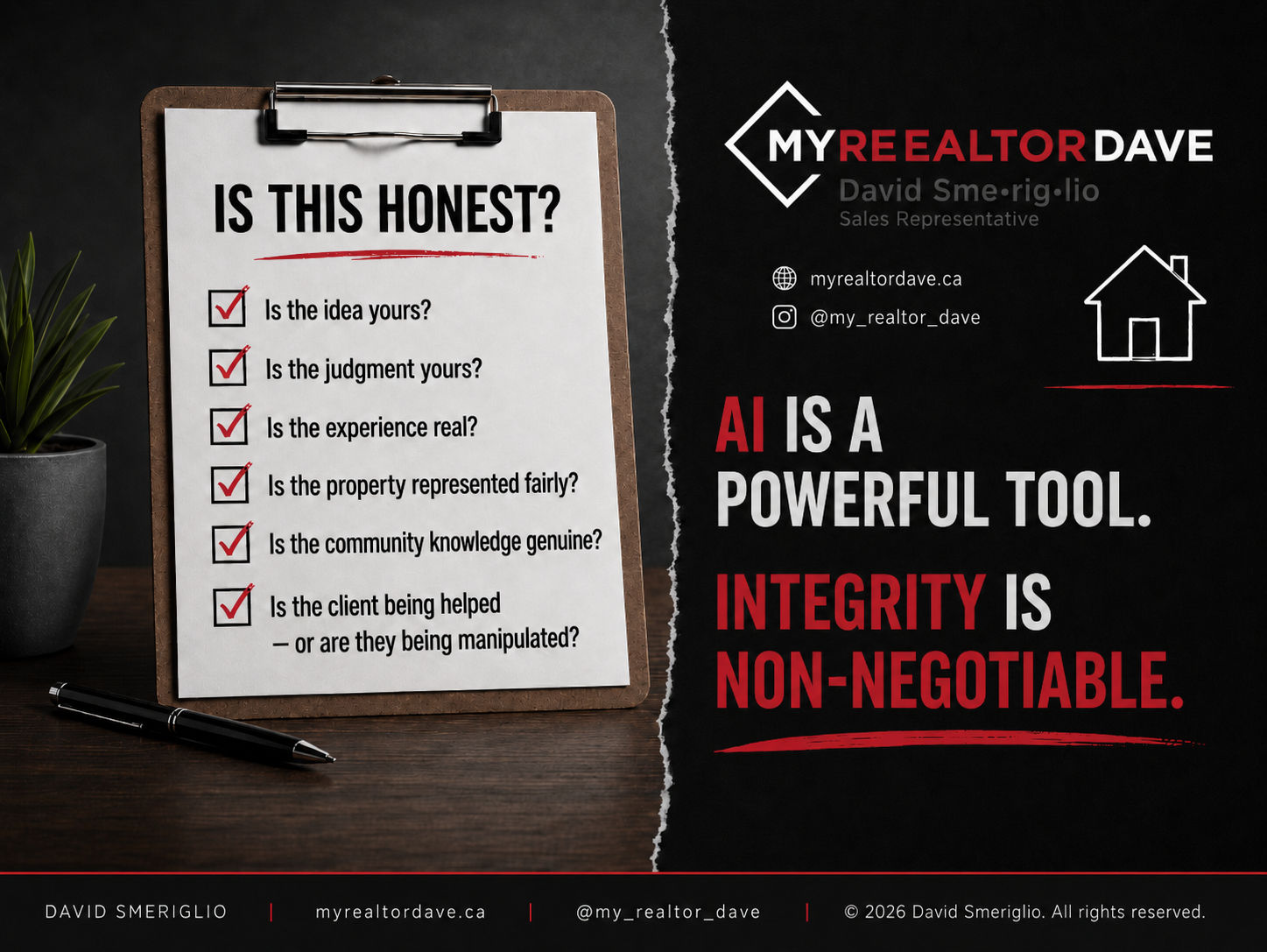
The ethical question is not, did AI help create this? The ethical question is, is this honest?
Is the idea yours?
Is the judgment yours?
Is the experience real?
Is the property being represented fairly?
Is the community knowledge genuine?
Is the client being helped, or are they being manipulated?
For me, the line is simple. I do not use AI to pretend I am something I am not. The ideas are mine. The values are mine. The experience is mine. The judgment is mine. The responsibility is mine.
AI may help me frame an article, clean up my writing, develop an image concept, or organize a complicated thought. But it does not replace the part that matters most: the professional judgment behind the message.
If AI helps you communicate with more clarity, prepare with more care, or explain something difficult in a way that genuinely helps the client, I have no issue with that. But if AI is being used to flood people with empty content, fake expertise, fake local knowledge, misleading images, manufactured urgency, or manufactured personality, then it is not improving the industry.
It is just making the noise louder. And the noise was already loud enough.
Also Worth Reading
If this article has you thinking more carefully about Realtor value, another related question is worth exploring: why fear-based or shame-based real estate marketing should make consumers pause.
Related Reading: Where This Conversation Started
This broader discussion grew out of a smaller but important contract issue involving a missed hot water tank rental in an Agreement of Purchase and Sale. The details matter, but the bigger lesson is about judgment, fairness, and how people respond when something goes wrong.
