Hot Water Tank Dilemma
Ontario Real Estate: What Happens When a Contract Mistake Gets Enforced
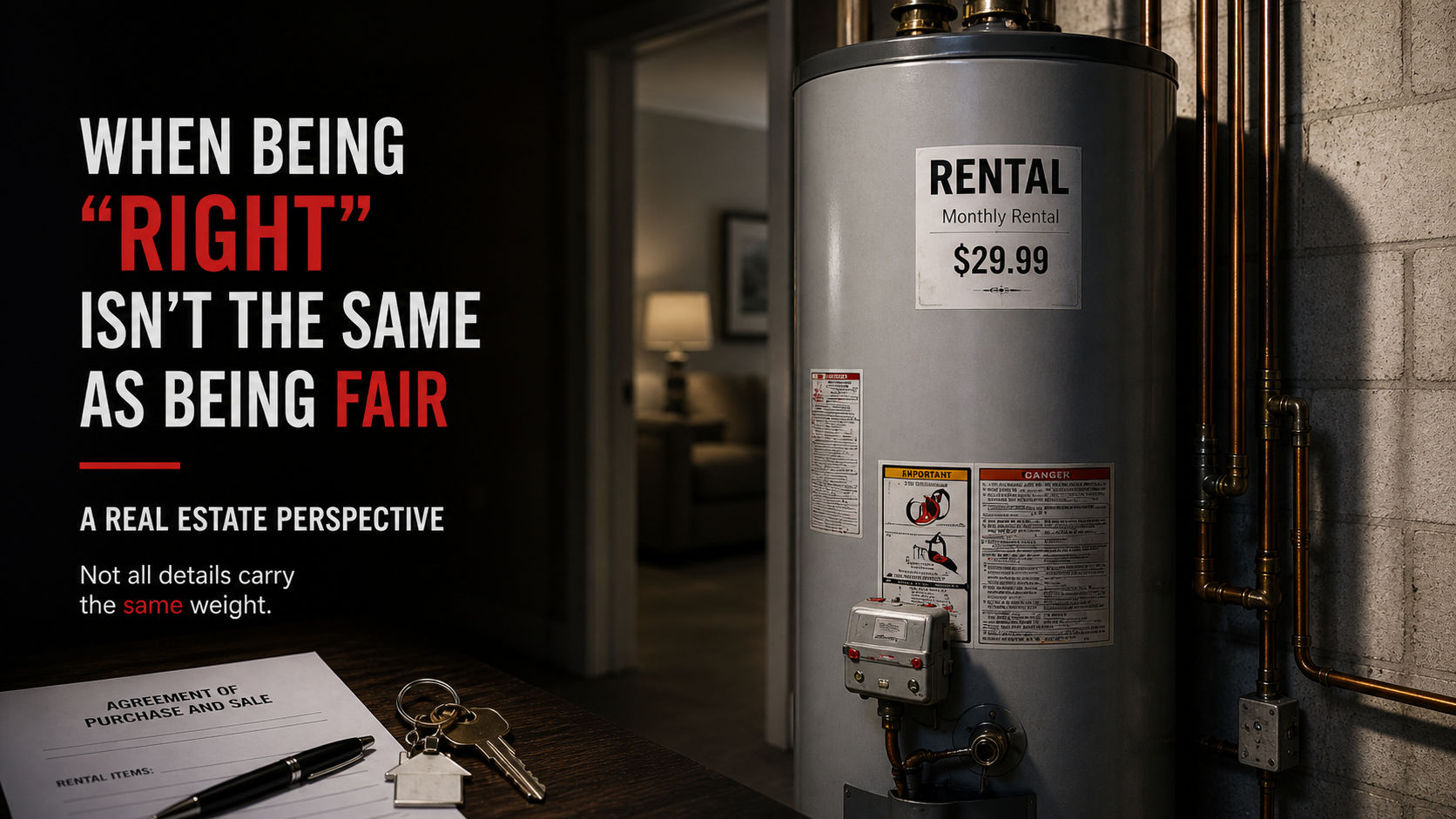
When Being “Right” Isn’t the Same as Being Fair
Estimated read time: 5 minutes
Every so often, a situation comes up in real estate that perfectly highlights the gap between what’s legally correct and what feels right.
This is one of those situations. A property sells. The deal goes firm. Everything appears in order.
Then, just days before closing, someone notices something small but significant. The MLS listing clearly shows the hot water tank is a rental.
But in the Agreement of Purchase and Sale (APS), the rental items section is left blank. On paper, that changes everything.
The Legal Reality
In Ontario, the APS governs the transaction, not the listing. If the rental clause is blank, it means the buyer did not agree to assume any rental contracts.
And since a hot water tank is typically considered a fixture, the seller is now obligated to deliver it free and clear.
Which usually means:
The seller has to buy out the rental contract. From a legal standpoint, this is straightforward.
And many lawyers will advise their clients the same way: Hold your position. Don’t amend. You’re entitled to it.
Where It Gets Uncomfortable
Because the law doesn’t ask why the clause was blank. It doesn’t consider:
-
That the listing clearly disclosed the tank as a rental
-
That both the buyer and their agent saw that listing
-
That no one raised the issue during the offer process
-
That rented tanks are extremely common in Ontario
It just looks at the contract and enforces it.

Context Matters More Than We Admit
Let’s put this into perspective.
- A typical hot water tank rental in Ontario might cost $25 to $35 per month.
- They last roughly 10 to 12 years.
- A replacement tank might cost $2,200 to $2,800 installed.
Even a more expensive tankless system might land in the $3,500 to $5,000+ range depending on the setup.
In the context of a $1,000,000 home, this isn’t insignificant, but it’s also not transformative.
More importantly, it’s expected. Most buyers assume the tank is rented unless told otherwise.
A More Meaningful Comparison
A more meaningful example is when ongoing costs are misstated.
Let’s say condo fees are off by $75 per month and increasing over time.
At first glance, that may not seem significant. But unlike a water tank, which has a limited lifespan and a known replacement cost, condo fees are ongoing.
They don’t expire and they tend to rise. Over time, that difference compounds into a meaningful and permanent increase in ownership cost.
That’s not a small detail. That’s something that directly affects affordability and long-term planning. And in that case, pushing back isn’t aggressive, it’s necessary.
So What’s the Difference?
It comes down to one question:
Was the buyer misled in a meaningful way? In the water tank scenario: Likely no.
In the condo fee scenario: Clearly yes, and that distinction matters.
The Problem With “Use It Because You Can”
There’s a growing tone in some corners of the industry that says:
If the contract gives you leverage, use it. No hesitation. No context. No discussion.
And while that’s legally defensible, it’s not always good advice. Because real estate isn’t just about winning clauses.
It’s about:
-
Completing deals
-
Managing relationships
-
Protecting reputations
-
Applying judgment
A Better Way to Think About It
A good advisor doesn’t just explain what you can do.
They explain:
-
What it costs
-
What it risks
-
What it signals
Yes, a buyer in this situation may be entitled to force a buyout.
But they should also understand:
The financial impact is relatively limited The issue was already known The mistake was administrative, not deceptive
From there, the decision becomes more thoughtful:
-
Push for full buyout
-
Negotiate a compromise
-
Or proceed as originally understood
Final Thought
There’s a difference between protecting your client and taking advantage of a situation that didn’t actually harm them.
The law gives you rights.
But good judgment determines when to use them.
David Smeriglio
If you ever want a clear, straight answer without the noise, feel free to reach out.
