I Have a Buyer for Your Home. What Should You Ask Before You Call?
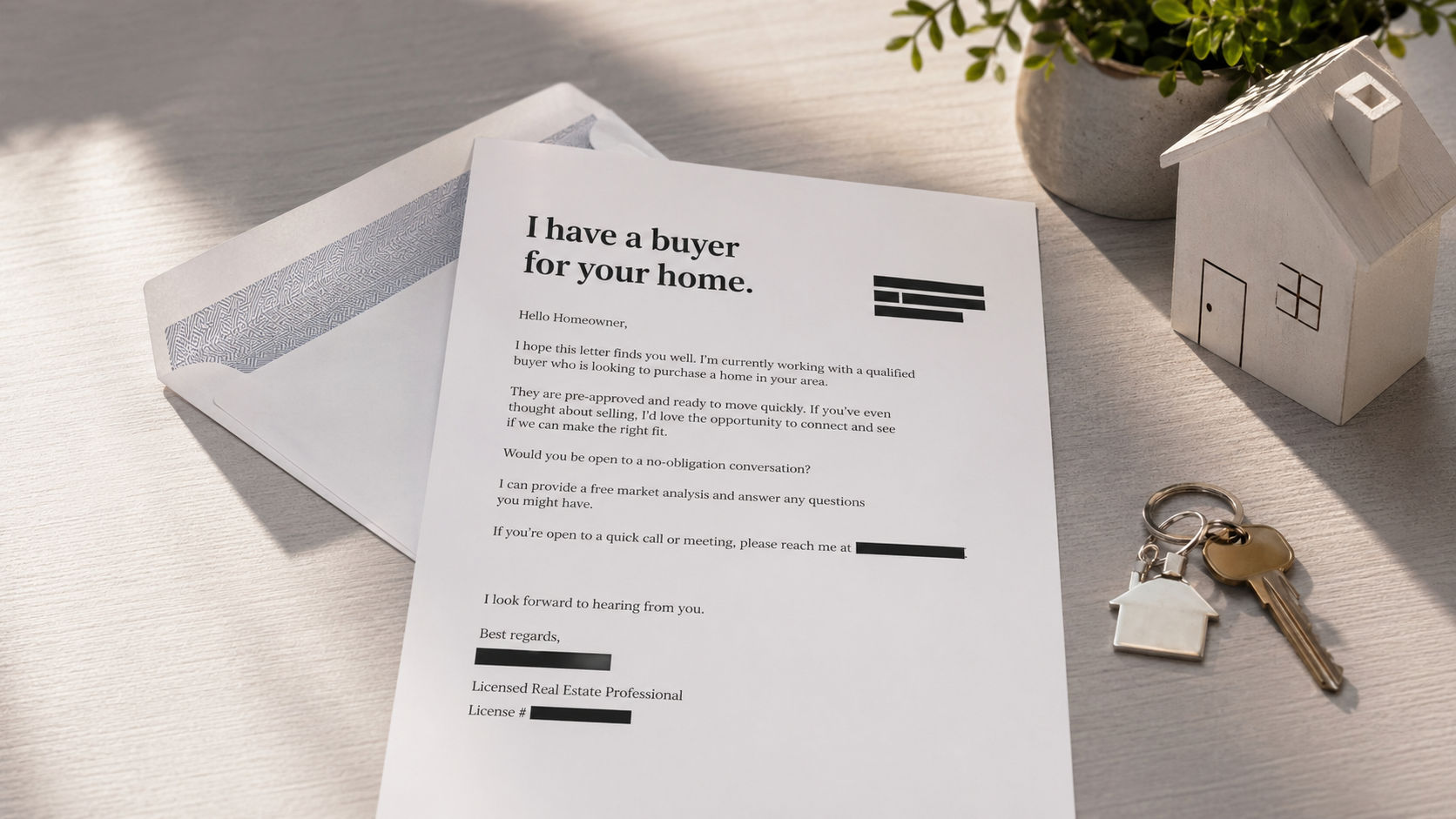
It may not be a scam. But a private offer is still an untested offer.
By David Smeriglio
5 minute read
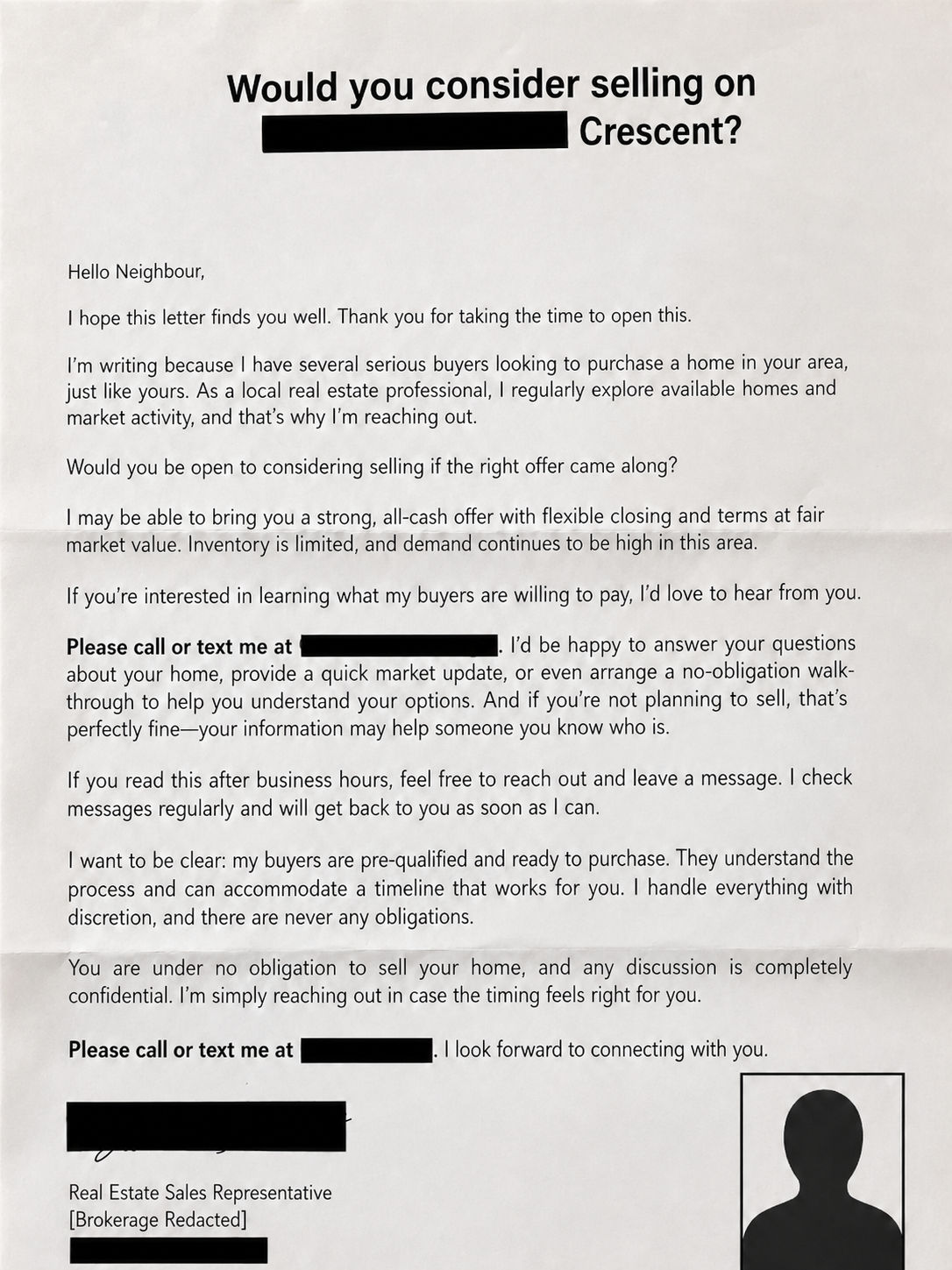
Some people immediately called it a scam. Others said they knew the agent and believed he was honest. In reality, both reactions can be understandable. These letters are not automatically fraudulent. Real estate agents do use direct mail to find potential sellers, and in some cases, there may genuinely be a buyer looking for a particular neighbourhood, school district, lot size, or style of home.
But homeowners need to understand one important point: having “a buyer” does not automatically mean you are getting the best buyer, the best price, or the best terms.
 A private offer is not the same as a tested market
If one buyer is interested in your home, that may be useful information. But it is still only one buyer. Until your home has been properly exposed to the market, you do not really know what the broader buyer pool may have been willing to pay.
That does not mean every home needs to be listed publicly. There are situations where a quiet sale, exclusive listing, or private approach may make sense. Privacy, timing, tenant issues, health concerns, convenience, or a very specific buyer profile can all be valid considerations.
The key is that the decision should be made knowingly, not because a letter created urgency or made the opportunity feel more exclusive than it really is.
The questions to ask before you call
Before responding to a letter like this, it is worth asking a few direct questions.
Is there a specific buyer, or is this general marketing?
There is a meaningful difference between “I have a buyer for your home” and “I am looking for sellers in your area.” Both may be legitimate, but they are not the same thing.
Has the buyer been financially qualified?
Interest is not the same as ability. A serious buyer should have a realistic understanding of price, financing, deposit expectations, and closing terms before a homeowner takes the conversation too seriously.
How would the value of my home be established?
A private offer should still be measured against recent comparable sales, current competition, market conditions, and the specific features of your property. Convenience should not replace proper valuation.
Who is representing whom?
If the same agent is trying to connect the buyer and seller, you need to clearly understand representation, conflicts, and how your interests will be protected. This is especially important if you are being approached directly and have not had a chance to get independent advice.
The real risk is not always fraud
The bigger risk is not necessarily that the letter is fake. The bigger risk is that a homeowner accepts a convenient offer without knowing whether the open market, or even a more structured private process, may have produced a better result.
Sometimes the first offer is the right offer. Sometimes it is not. The only way to know is to compare it against real market evidence.
That means looking at recent sales, active competition, buyer demand, property condition, timing, and the seller’s own goals. Price matters, but so do terms, certainty, deposit strength, conditions, closing flexibility, and the overall risk of the offer.
My advice to homeowners
Do not panic. Do not assume every letter is a scam. But do not treat it as a favour either.
Ask questions. Get clarity. Understand the numbers. And before making any decision, speak with someone who can help you assess whether the offer reflects your home’s actual market value.
A private approach can be legitimate. But your home is too important to sell based on one letter, one phone call, or one buyer’s version of the market.
